
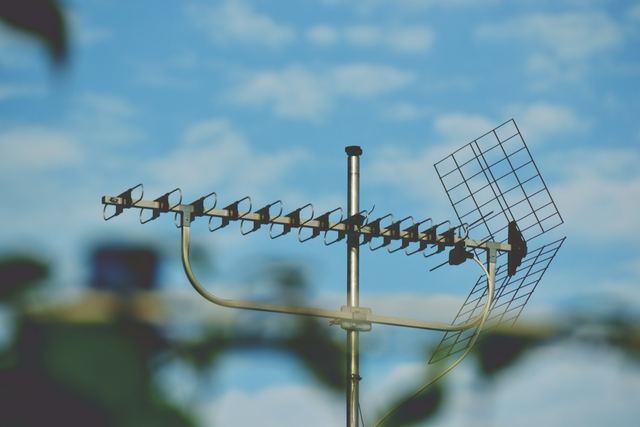
What's different about aerials in Auckland
One big tower in the west
Kordia says its Waiatarua tower, on the western edge of the city, still sends digital terrestrial TV across greater Auckland, from the Bombays to the Brynderwyns. Freeview says a UHF aerial should be directed at your nearest transmission tower.
Dips, ridges and tall buildings
Freeview says rooftop aerials in weak-signal areas, in dips or near tall buildings may need raising above the roof so nothing blocks them. Between Auckland's volcanic cones, gullies and new apartment blocks, a signal reading on your own roof beats guessing.
Westerlies and spring gales
NIWA says Auckland is vulnerable to strong gusty westerlies, sometimes with thunderstorms, and spring is generally the windiest season. A mast that isn't braced properly can drift off aim, or come down.
Salt near the harbours
BRANZ's summary of NZS 3604 puts homes within 500 m of the coast, harbours included, in exposure zone D for wind-blown sea-spray salt. Its testing on an Auckland building found sheltered spots that rain doesn't wash collected about 3 to 8 times more salt than exposed ones, which matters for brackets tucked under the eaves.
Apartments and shared roofs
Freeview says that in a shared building like an apartment block, you should check with your building manager first. With more Aucklanders in townhouses and apartments than ever, a lot of aerial jobs start with that conversation.
UHF aerial or satellite dish?
Freeview says there are two ways to get it: a UHF aerial that picks up the signal sent over the air from a tower, or a satellite dish. Its online coverage check shows which suits your address, and Freeview suggests running it before you call an installer.
If it's a Sky subscription or Sky box problem, start with Sky. Cabling, wall plates, extra TV points and the power behind a wall-mounted screen are where an electrician comes in.
Where the electrical work comes in
The aerial and its coaxial cable carry the TV signal, not mains power. A new power point behind a wall-mounted TV is different: that's electrical work for a licensed electrician. The EWRB says all prescribed electrical work must be certified on an Electrical Safety Certificate, and new fixed wiring also gets a Certificate of Compliance.
Don't get on the roof to adjust an aerial yourself, especially anywhere near the service line to the house. An installer with the right ladders and fall protection can re-aim or replace it safely.
What a good aerial quote covers
- Which tower or satellite the aerial or dish will be aimed at, and the signal reading they expect at your address.
- Mounting and bracing that suits how exposed your roof is to the wind.
- Brackets and fixings suited to salt air if you're within 500 m of the coast or a harbour.
- Where the cable runs, and how many TV points it feeds.
- Any new power points, done by a licensed electrician, with the certificates.
- Sign-off from the building manager or body corporate if the roof is shared.

What we'd do with an Auckland aerial
We'd run Freeview's coverage check for our address first, then have someone take a signal reading on the roof before anything's bought. Near a harbour, we'd ask for corrosion-resistant fixings and have the old bracket looked at while the installer's up there. And if the TV is going on the wall, we'd have the power point and cabling done in the same visit.
Want a specialist to sort it?
Tell us the job and your postcode. We match the licence-checked local electrician who does this kind of work, and they call you. No ring-around, and your number goes to them alone.