
Hot, scorched or buzzing? Stop using it
A switch or power point that's hot, discoloured, buzzing or smells of burning usually has a loose or failing connection behind it. Stop using it, turn that circuit off at the switchboard if you can reach it safely, and get an electrician. Smoke or flames mean getting everyone out and calling 111.
Common faults, and where to start
| Usual causes | Where to start | |
|---|---|---|
| Power keeps tripping | A faulty appliance, water in an outdoor fitting, an overloaded circuit, or failing insulation | Why the power keeps tripping |
| Lights flicker | A loose connection, a failing lamp or dimmer, or the lines company's side if the whole street flickers | Flickering lights |
| One room or circuit is dead | A tripped breaker or blown fuse, or a loose connection at one fitting that feeds the rest | Power out in part of the house |
| A tingle from a tap or appliance | A faulty appliance or an earthing fault. Treat it as urgent | Shocks and burning smells |
| A warm or scorched switch or power point | A loose terminal, or a worn fitting carrying too much load | Stop using it and call an electrician |
How an electrician finds the fault
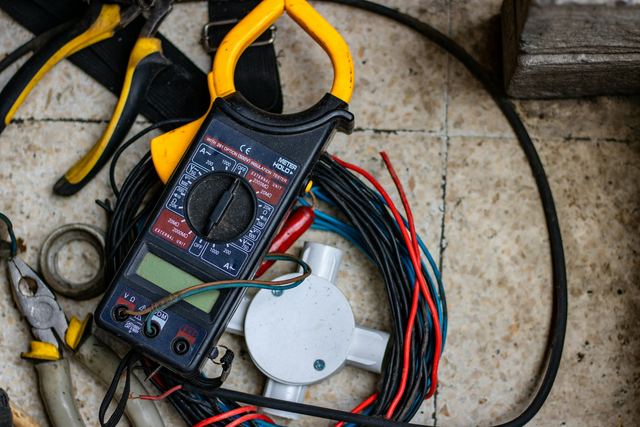
Fault finding is mostly method. The electrician asks what happened and when, isolates circuits one at a time, and tests insulation and earthing with instruments until the fault is narrowed down to a cable run, a junction or a single fitting.
Intermittent faults take longer, because they have to show themselves. A note of what was running, and what the weather was doing when it tripped, can save a lot of time. Mention any wiring a previous owner added, too.
A good repair fixes the cause, not the symptom. The two shortcuts to watch for are replacing a scorched power point without checking the cable behind it, and fitting a bigger breaker so a circuit stops tripping.
The certificate a repair comes with
The EWRB (Electrical Workers Registration Board) treats repairing or replacing a fitting in an existing installation as low-risk work. Swapping a light switch, power point or RCD comes with an Electrical Safety Certificate (ESC), and a Certificate of Compliance is optional.
If the repair turns into new wiring or an extended circuit, it becomes general work, and you should get both a CoC and an ESC. Repairing or replacing a faulty main switch or main fuse on existing work still counts as low-risk.
The Consumer Guarantees Act says a service has to be carried out with reasonable care and skill and be fit for the purpose you asked for. If a fault in the work can be fixed, the business must put it right within a reasonable time.
Can I do the repair myself?
The law gives owner-occupiers a narrow exception. In a home you own and live in, and only when no one's paying you, the rules allow removing and replacing existing switches, power points and light fittings, with the circuit fully disconnected while you work and the fitting tested afterwards. It never covers switchboards or meter boxes, never covers rentals, and the EWRB still strongly recommends a licensed electrical worker for any electrical job.
We'd leave it alone. A loose terminal behind a power point is exactly the kind of fault that starts fires, and the person who finds it should have the instruments to test it properly. WorkSafe New Zealand's guidance on doing your own electrical work sets out the limits, and what you can do yourself explains them.
Safe checks before you call
You can
- Check the switchboard for a tripped breaker or RCD, and reset it once.
- Unplug everything on the dead circuit, then reset again to rule out an appliance.
- Plug a lamp you know works into a dead power point to see whether it's the outlet or the appliance.
- Check whether the neighbours have power before assuming it's your house.
Leave to a licensed electrician
- Finding faults in the fixed wiring.
- Replacing scorched or broken switches, power points and light fittings.
- Anything at the switchboard or meter board.
- Repairs after water, rodent or storm damage.
Before you book a repair, ask
- Do you do a lot of fault finding, or mainly new installs?
- How will you find the cause, and will you explain it to me?
- Will I get an Electrical Safety Certificate for the repair?
- If you find something else unsafe, will you check with me before doing more?
- Can I see your licence ID?
Why a fault-finding specialist
Some electricians mostly do new builds. Others spend their days chasing faults in lived-in homes, and that's the one you want for a repair: they're faster at narrowing things down, and they've seen your fault before. Tell us what's happening, and we'll match you with one licence-checked local electrician who does fault finding.

What we'd do first
We'd write down what happened, when, and what was running, then do the safe checks at the switchboard. If the fault comes back, or there's any heat, smell or tingle, we'd stop there and get an electrician who specialises in fault finding, and ask them to explain the cause before they fix it.
Want a specialist to sort it?
Tell us the job and your postcode. We match the licence-checked local electrician who does this kind of work, and they call you. No ring-around, and your number goes to them alone.