
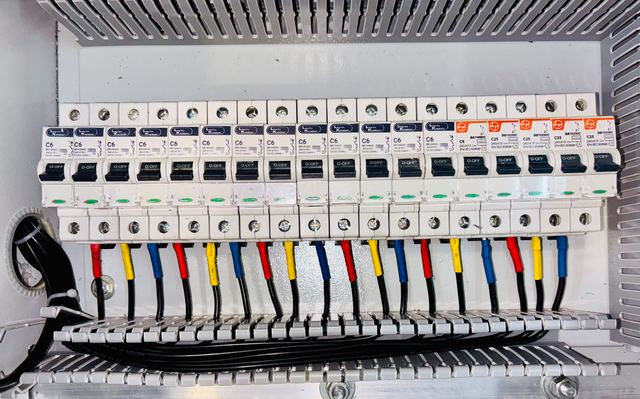
Single-phase or three-phase?
Single-phase power arrives on one active conductor. Three-phase arrives on three, which lets a property spread big loads across them and run three-phase equipment such as some workshop machines and larger heat pumps.
It isn't automatically better for a house. A single-phase supply with the right fuse, a well-planned switchboard and some load management often handles an EV charger and a heat pump. WorkSafe's January 2026 EV guidance says that with advanced load management, a 32 A (7.5 kW) charger can likely give enough charge for a typical day's driving without raising a typical home's peak use.
PowerNet also points out that not all EVs support three-phase charging, so check your car before upgrading the supply for it. Three-phase power explained covers the basics in more depth.
Signs three-phase is worth looking at
- You're setting up a workshop with three-phase machinery.
- You're adding several large loads together, say heat pumps, an EV charger, an induction cooktop and a spa.
- Your electrician says the single-phase supply can't carry what you're planning, even with load management.
- You want a larger solar system. WEL Networks, for example, treats solar up to 10 kW single phase or 30 kW three phase as a small connection.
- The house already has an older multi-phase supply. The Power Company notes there are many older multi-phase homes on its rural Southland network.
How the upgrade works
Going from single-phase to three-phase changes your connection, so the lines company has to approve it first. Top Energy says you must apply before upgrading an existing supply, for example from single to three phase or to a bigger fuse. WEL Networks calls it an Increase Load application and says to allow 12 to 16 weeks for the quote. Westpower handles single to three phase upgrades through a works request from your electrical contractor.
In most cases the electrician fills in the application with you and supplies the phase and fuse details the lines company asks for. Your retailer may need to change the meter. Then new mains cable is run, a three-phase switchboard goes in, and the lines company's approved contractor connects and livens the supply.
Not every street has three-phase lines outside. If the lines company has to extend or upgrade its own equipment to reach you, the job gets bigger and the wait gets longer, and you'll hear about it through the application.
Certificates and the inspection
New mains and a higher-capacity switchboard are high-risk work under the EWRB's risk levels. You should get a Certificate of Compliance, an Electrical Safety Certificate, and an independent inspection by a licensed electrical inspector, who issues a Record of Inspection. Until both the CoC and that record exist, the job isn't legally complete.
Your electrician is responsible for arranging the inspector. Lines companies generally won't liven new work until the paperwork is in place: Marlborough Lines, for one, says premises aren't livened until the work has its certificate and inspection.
Your part, and the electrician's
You can
- List everything you plan to add over the next few years.
- Check whether your EV and any workshop gear can actually use three-phase.
- Find your ICP number, usually on your power bill, so the application can go in.
- Ask your retailer whether your meter will need changing.
Leave to a licensed electrician
- Working out your maximum demand, and whether three-phase is really needed.
- The lines company application, with the phase and fuse details.
- New mains, the switchboard and all the wiring.
- Arranging the licensed electrical inspector.
Questions to ask first
- Could load management or a bigger single-phase fuse do the job instead?
- Is there three-phase supply in my street?
- What's the lead time with my lines company at the moment?
- Which parts of the job are high-risk work, and who's the inspector?
- Will my retailer need to change the meter?
Why the specialist matters
Three-phase upgrades sit between house wiring and network work. The electrician you want has done the application on your lines company's network before, knows how its approved contractors work, and will size the job honestly, including telling you when you don't need it. We'll match you with one licence-checked local electrician who does supply upgrades.

Where we'd start
We'd ask an electrician to work out the home's maximum demand with everything you're planning, before applying for anything. If single-phase with load management covers it, we'd stop there. If it doesn't, we'd get the lines company application in early, because on some networks the wait runs to months.
Want a specialist to sort it?
Tell us the job and your postcode. We match the licence-checked local electrician who does this kind of work, and they call you. No ring-around, and your number goes to them alone.