
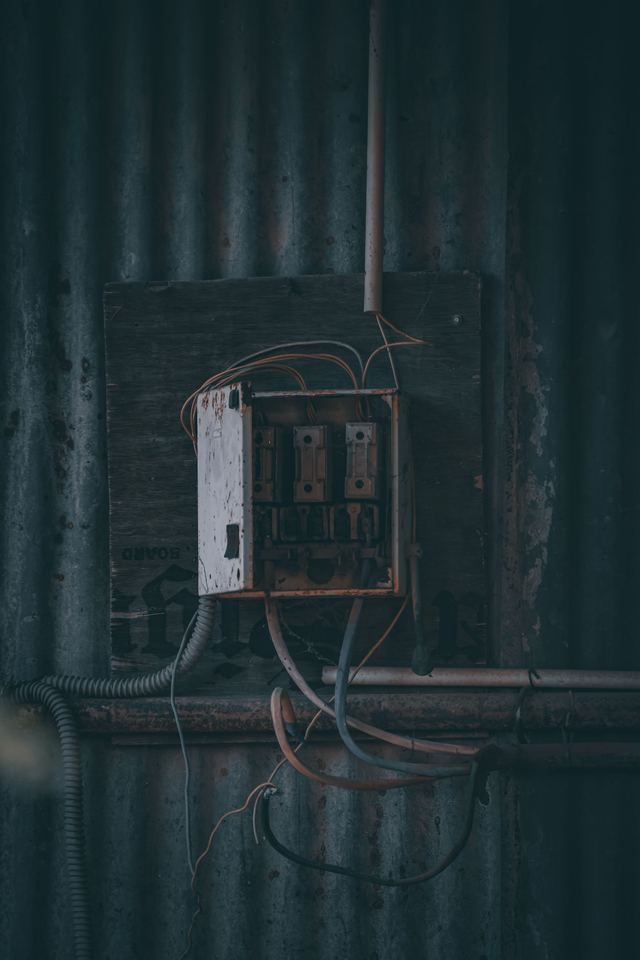
How to tell if you have rewireable fuses
Rewireable fuses are white ceramic carriers that pull out of the board, each with a short length of fuse wire held between two screws. Older boards often have one for every circuit, sometimes with a newer breaker or two added later.
Cartridge fuses look different: a sealed cylinder that's replaced whole. Circuit breakers are small switches that flick off when they trip, and an RCD is the one with a test button.
Fuse blown? Call an electrician, not the toolbox
ENA (Electricity Networks Aotearoa) says that when the fuses at your switchboard have blown, the person to call is an electrician. Never put in thicker wire, a nail or anything else to get the power back on. If the board is scorched, smells odd or crackles, leave it untouched and phone your lines company; for smoke or fire, dial 111.
Why they're a concern
No protection for people. A fuse blows when a circuit draws too much current. It doesn't react to a small leak through someone's body, which is the job of an RCD, and a board with only rewireable fuses usually has no RCDs at all.
The fuse wire trap. When a fuse keeps blowing, it's tempting to fit heavier wire so it stops. That turns the fuse into a link that won't blow before the cable overheats. An electrician who finds mixed or oversized fuse wire on a board treats it as urgent.
No room to grow. New lighting and power point circuits in a home need RCD protection, according to WorkSafe. An old fuse board rarely has space for that, so a heat pump, an EV charger or a kitchen renovation usually means a new board.
What replacing them involves
Most jobs swap the whole board: new circuit breakers, RCDs on the lighting and power point circuits, a new main switch, and spare room. The electrician checks the old wiring as they go, because a fault a fuse put up with can trip a new RCD straight away.
A higher-capacity board is high-risk work, so it gets an independent inspection and a Record of Inspection on top of your Certificate of Compliance and Electrical Safety Certificate. Replacing only a faulty main switch or main fuse on existing work is low-risk and doesn't need inspecting.
Old boards often sit in front of old cable. If the rubber or cloth insulation is breaking down, the electrician may suggest replacing the old wiring too, or at least the worst circuits.
Do the new wiring rules force an upgrade?
No. A fuse board in good order doesn't have to come out just because the wiring rules changed: WorkSafe's guidance is that existing installations may carry on being used and repaired unless they're unsafe. The reason to replace it is safety, not paperwork.
What you can do, and what's licensed work
You can
- Find the main switch and label it, so anyone at home can turn the power off.
- Note which fuse covers which rooms, without pulling any fuses out.
- Photograph the board from the front with its door open, for the electrician.
- Keep anything flammable away from the board.
Leave to a licensed electrician
- Replacing a blown fuse or its wire.
- Anything inside the switchboard: fuses, breakers, RCDs and the main switch.
- A new board, and any new circuits.
- Arranging the inspection if the new board is higher-capacity.

Our honest take
If our board still had rewireable fuses and no RCDs, we'd plan the upgrade now rather than wait for a fuse to go on a winter night. We'd have the wiring tested at the same visit, and size the new board for the heat pump or charger we'd want in the next few years.
Want a specialist to sort it?
Tell us the job and your postcode. We match the licence-checked local electrician who does this kind of work, and they call you. No ring-around, and your number goes to them alone.